How I write a song
My Songwriting Process: From “No” to "Time Is a Hammer"
I wanted to share this example because it illustrates how I write songs.
The song Time Is a Hammer began as a piece called “No,” written shortly after the death of my dog, Zeus. The melody and lyrics were already there. The core song—the part that mattered most—was complete.
I write songs using Touch Notation, focusing first on melody and lyrics. Long before there is a finished recording, there is a song.
What changed over time was not the songwriting itself, but how the song was presented. Through arrangement, instrumentation, and production, No eventually evolved into Time Is a Hammer.
I share both versions because they demonstrate something important about my creative process. The finished recording did not begin with production. It began with a melody, a lyric, and an idea worth exploring.
My philosophy is simple:
If a song works with nothing more than melody and words, it has the potential to become something lasting.
The original version of No and the finished version of Time Is a Hammer represent two stages of the same creative journey. The song remained the same at its core. The presentation evolved around it.


My Songwriting Process: From “Breathe" to "Golgotha"
Golgotha traces its origins to an original composition titled Breathe, written in 2018 using my Touch Notation method. The melody's distinctive repeated-note phrasing, cyclical motifs, and rise-and-release contours formed the musical foundation for what would eventually become the finished work.
Years later, I returned to this composition and began exploring ways to expand its emotional and musical scope. Using the original melody as source material, I developed the concept through an extended creative process involving lyric writing, musical direction, arrangement exploration, and numerous rounds of refinement and selection.
Throughout the process, the guiding objective remained the same: preserve the character of the original composition while allowing it to grow into something larger. The resulting work transformed a personal meditation on breath, surrender, and release into a dramatic retelling of the crucifixion and victory over death.
While Golgotha differs substantially from Breathe in scale, orchestration, structure, and lyrical content, the underlying musical language remains connected to its origin. Listeners familiar with both pieces may recognize shared melodic fingerprints, including repeated-note phrase construction, cyclical rhythmic patterns, and recurring rise-and-release gestures.
The Touch Notation sketch shown below represents one of the earliest documented stages in the evolution of Golgotha, preserving the musical seed from which the final work ultimately grew.


My Song Writing Process: From Manuscript to Recording
Before I ever used AI-assisted music tools, I spent years writing songs in a notation system that is called Touch Notation. Those manuscripts contain the original melodies, lyrics, and song structures that served as the foundation for many of my later recordings.
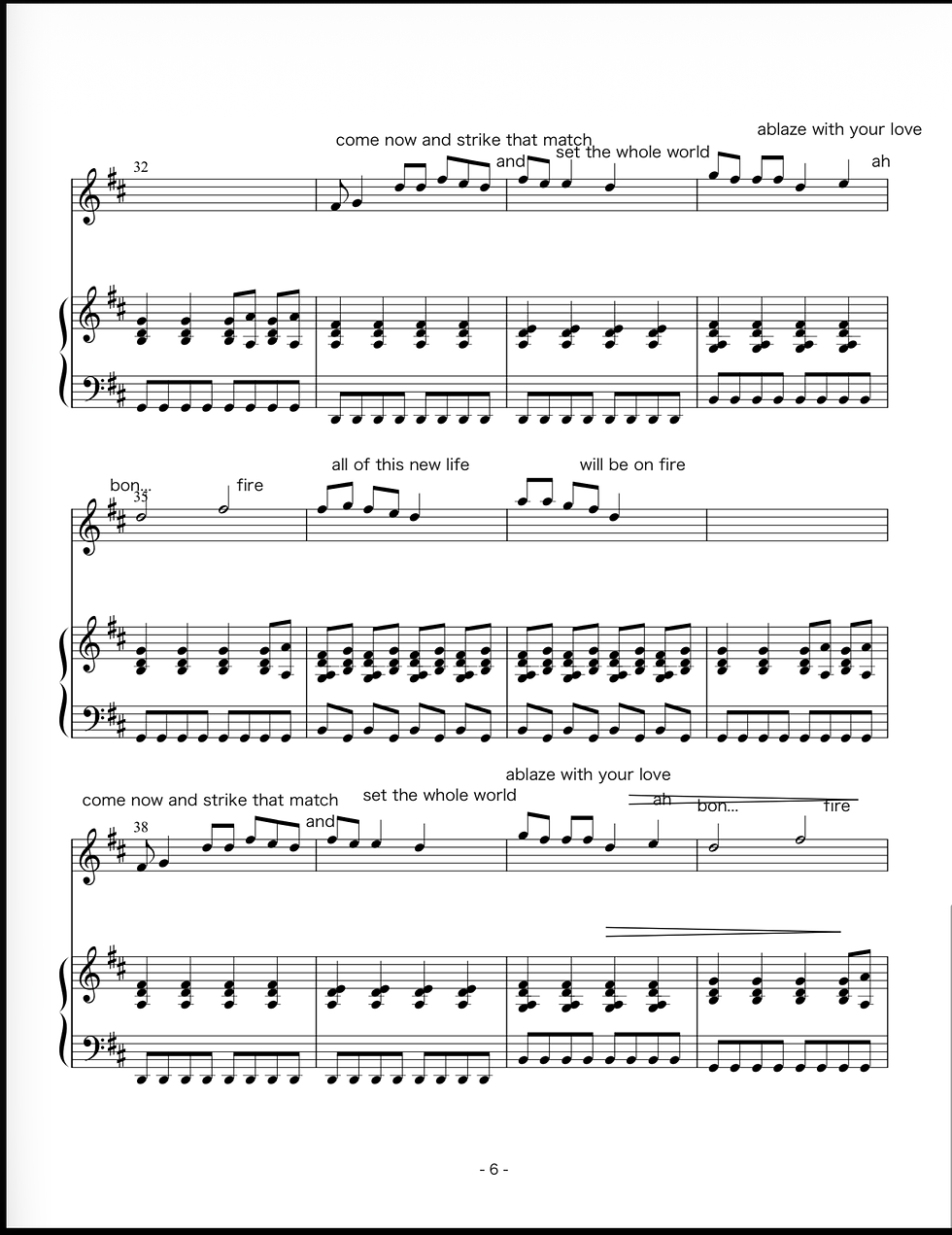
Bonfire, written in 2018, is one example. The score shown below contains the song’s central melody, lyrics and harmonic framework years before modern AI music generation tools became available. The core creative decisions—the themes, melodic contours, lyrical imagery, and overall composition—originated in the manuscript itself.
In recent years I have incorporated AI-assisted production platforms into my workflow. Rather than replacing the songwriting process, these tools function much like a virtual studio: helping explore arrangements, instrumentation, vocal performances, and production styles that would otherwise require a team of musicians and producers.
My role remains that of songwriter, editor and producer. Some songs begin as complete compositions like Bonfire. Others begin as shorter melodic ideas that are expanded through collaboration with AI tools. In every case, the final recording emerges through a process of selection, revision, refinement, and artistic judgment.
I view AI as a new musical instrument—one capable of transforming sketches, melodies, and written concepts into fully realized recordings. The technology contributes possibilities; the songwriter chooses the path.